Katakana Geminate Consonant (Small Tsu)
🔊 Tap any vocabulary to listen
The small tsu (っ), called sokuon in Japanese, is used to indicate a doubled consonant. It creates a brief pause before the consonant in pronunciation.
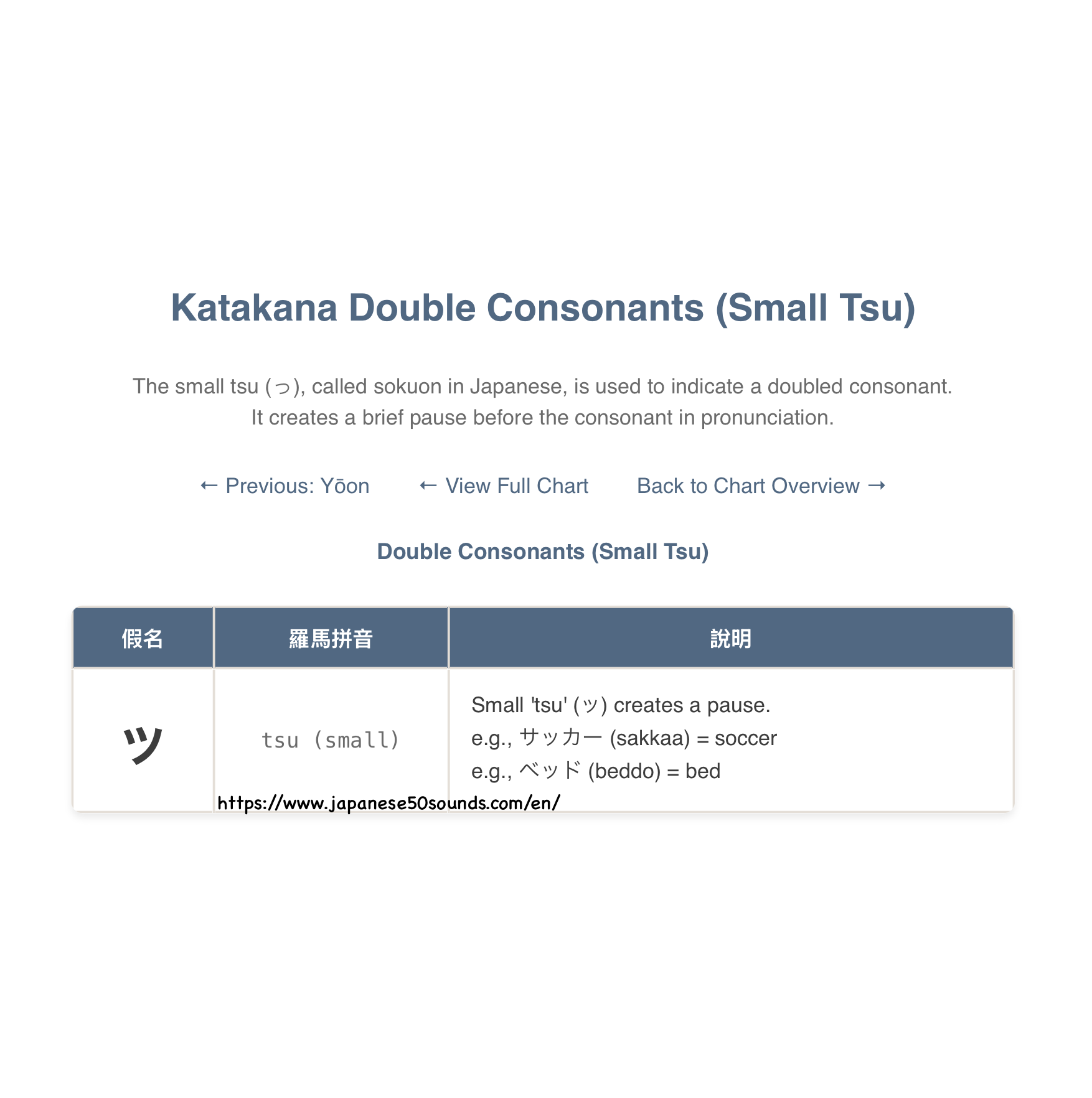
Geminate Consonant (Small Tsu)
| Kana | Romaji | Description |
|---|---|---|
|
ッ
|
tsu (small)
|
The small tsu (っ) creates a pause. e.g., サッカー (sakkaa) = soccer e.g., ベッド (beddo) = bed |
Katakana Sokuon (ッ) — FAQ
What is the katakana small tsu (ッ)?
The small tsu ッ is the sokuon (促音), a symbol that doubles the following consonant to create a short pause. It is written smaller than the normal katakana ツ. Example: ベッド (beddo) = "bed".
How do you pronounce the small ッ?
The ッ itself has no sound. You hold a brief silent beat before the next consonant, effectively doubling it. サッカー is pronounced sak-kā, not sa-tsu-kā.
How do you type the small ッ on a keyboard?
On a romaji IME, double the following consonant: type kk, pp, tt, ss and so on. For example type beddo to get ベッド, or sakka- for サッカー. To input a standalone ッ, type xtu or ltu.
What is the difference between ッ (katakana) and っ (hiragana)?
They work identically, both doubling the next consonant. ッ appears in katakana words (usually loanwords like バッグ baggu), while っ appears in hiragana words (like がっこう gakkō). Practice both with audio on Japanese 50 Sounds, a free hiragana & katakana learning tool.